

Telling Our Story: A Few Questions to Get Us Thinking
By Derek Penwell
As I write, I'm headed to Denver on the final leg of this sabbatical journey. It's been a wonderful summer, and I'm grateful to have been given the opportunity, both by the Lilly Foundation and the good folks at DBCC. Thank you.
As you know, I've been thinking a lot about story and plot this summer. In particular, I've wondered about how we can tell DBCC's story over the past eight years. I know you all have also been doing work on the kinds of changes that have occurred, and how those changes fit into a coherent narrative. Done well, storytelling is a difficult but extraordinarily gratifying task. I want to thank you for the time you've invested in this process.
Earlier this summer I wrote about the heart of narrative–conflict. Conflict not in the sense of fighting other people (although that too is a part of narrative conflict), but in the sense of two sometimes opposing forces: desire and obstacle. All good stories have some version of conflict. The protagonist wants something (e.g., to find love, to get back home, to survive tragedy, to discover something new, to find meaning, etc.) but is prevented from realizing the yearning by some external or internal obstacle (e.g., a competitor for the beloved's affections emerges, a mugging results in a lost wallet and passport, food and water supplies threaten to run out, the mathematical calculations fall short, a troubled past gets in the way of carving out a new future, etc.).
I challenged you to think about DBCC's desire (i.e., what has driven us?), and what kind of obstacles have arisen to make the journey more difficult. I'd like for us to have a discussion about that when I return, because (at least in my own thinking) this is a promising way of thinking about our story–both what has already happened, and what kind of things we might think of doing moving forward.
Perhaps a way to “prime the pump” as you reflect is for me to offer a few questions:
- What kinds of things have we been most afraid of as a congregation?
- Have we dealt with the root causes of those fears? If so, how? If not, why not?
- What kinds of things do we consider victories?
- What kinds of things have proved the most challenging?
- Which of the speakers this summer helped you think about your faith or the life of the church differently? Why?
- What kinds of ideas did the speakers evoke in you that might be worth thinking more about as we think about the future?
- If your thinking about DBCC has changed over the course of the summer, how has it changed?
You may think of more questions. What I hope this does is help us to consider the path our journey has taken, and where we think we're poised to go next.
I find this to be such an exciting opportunity, and I hope you've been stimulated by the broad range of speakers, the loving attention provided by Candasu, and the steady administration of the staff. I can't wait to see you next week!
Personal Piety (Mark 7:1-23)

The problem comes when we allow our desire for control over our lives to guide us instead of allowing God’s word, which tells us to love one another and pray for our enemies and feed the hungry and visit those in prison, to guide us. The next thing you know, we’ve taken actions that started out as merely convenient, or which supported our desires, and made them into rules to live by. Eventually those rules were codified and we began to remember them as coming straight from God’s lips.
Modern people didn’t start that fire. The problem of teaching human precepts as doctrines is an old problem – thousands of years old. That’s what was behind the argument in this passage from Mark.
The Impossible Gift
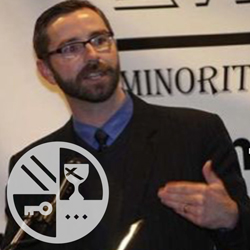
Welcoming Phil Snider as our last guest in the Telling Our Story series. Among other things, Phil is here to tell us what God looks like in a post-modern world. How should we encounter God? How should we talk about God?
If you want to build a ship, don't drum up the men to gather wood, divide the work and give orders. Instead, teach them to yearn for the vast and endless sea. -- attributed to Antoine de Saint Exupéry
Subscribe to us on iTunes!
Telling Our Story: Phil Snider (Aug 22-23)

On Not Being 'Religulous' Enough: Believers, Atheists & the Future of the Church
Conventional approaches to Christianity frequently draw sharp lines between believers and atheists, and in the process the primary truth of Christianity is reduced to doctrinal propositions that can (or cannot) be proven. As such, churches frequently provide programming and ministries designed to show they are right and their "cultured despisers" are wrong. However, this approach fails to take into consideration the more radical edges of Christianity that harbor subversive kernels of transformation for believers and atheists alike. This presentation provides possibilities for understanding the truth of Christianity in a way that is good news for believers and atheists, and it shows how churches can meaningfully connect with those who believe in God some of the time, or none of the time, or all of the time, which includes some of us all of the time and all of us some of the time.
About Phil
The Rev. Dr. Phil Snider is an award-winning author, community organizer, pastor and teacher who has served as the senior minister of Brentwood Christian Church in Springfield, MO since 2003. He is perhaps best known for his speech on equal rights for LGBTQ+ people, which has been viewed on YouTube over four million times. In addition to providing religious commentary in various local and national media outlets, including NPR affiliates, Al-Jazeera America television and nationally-syndicated radio programming, Phil's work has been featured in the Huffington Post, Religion Dispatches, Slate, Fox News and USA Today. He teaches religious studies courses at Missouri State University and Drury University, and his books include Toward a Hopeful Future, Preaching After God, and the forthcoming Justice Calls, which represents the first edited collection of sermons that are all open and affirming of LGBTQ+ people.
Phil's Stuff
- Twitter: @philsnider
- Blog: philsnider.wordpress.com
Schedule
The Rev. Dr. Phil Snider will lead a workshop from 12:00-2:00 on Saturday in which he will begin to explore the title of his presentation: “On Not Being ‘Religious’ Enough: Believers, Atheists and the Future of the Church". Later that evening, around 6:00 pm, the Lewises (216 South Sherrin Ave) will host him and whomever wishes to gather for a light supper. Bring something to share and come enjoy the conversation about the present church and what it might look like in the future—not just DBCC but the “church”. He will lead the Sunday School hour as he continues to discuss the topic, providing room for questions from participants. Phil’s final work with us will be as preacher for the worship service at 11:00 AM. There will be time in all of the sessions for questions and answers which may be raised as we listen and learn.
Come be a part of the closing event of the sabbatical in which the congregation has been engaged while Derek has been renewed by his time away in study and space for rest.
Praying for Wisdom (1 Kings 2:10-12, 3:3-14)
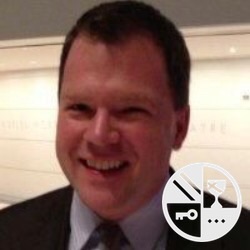
Brandon Gilvin delivers a message of reflection on our role in bending the moral arc of the universe toward justice.
We flubbed the first ninety seconds. Just imagine the most detailed and nostalgic description of the later referenced "Girl in the Sonic Youth T-Shirt".
Subscribe to us on iTunes!
Telling Our Story: Brandon Gilvin (Aug 15-16)

Presentation: The Church, The Neighborhood, The World
From Community Gardens to Global Sustainable Development, your church can develop partnerships that make a real difference. Join with Brandon Gilvin to discuss ways your community can use asset-based development, make global connections, and live into life-changing partnerships.
About Brandon
Brandon studied Religious Studies and Creative Writing at Hiram College in Hiram, OH, and received his Master of Divinity from Vanderbilt University in 2002. In both his undergraduate and graduate work, he sought to find intersection points between human creativity, a life of faith, and working for justice. In doing so, Brandon found passions for innovative, imaginative ministry and working to ask (and occasionally answer) difficult questions about globalization, human rights, and engagement with grassroots issues. While a student at Vanderbilt, Brandon interned at the Quaker Peace Centre in Cape Town, South Africa as a Peace Educator, an experience that further helped him develop his sense of vocation. Following graduation, Brandon served as a Pastoral Resident at Central Christian Church in Lexington, Kentucky. While there, he was deeply involved in the life of the church - teaching, leading worship, providing pastoral care and developing programs. In 2004, he returned to Africa through Global Ministries, serving the All Africa Conference of Churches in Nairobi, Kenya, as the Programme Executive for Communication, leading communication efforts for the network of more than 190 churches, denominations and ecumenical councils. He then served a year as the North American Regional Secretary of the World Student Christian Federation in Toronto, Ontario, where he worked with students interested in faith-based social activism.
From Toronto, Brandon headed to Olathe, KS, where he served Saint Andrew Christian Church as Associate Pastor. While at Saint Andrew, Brandon focused on Social Justice, Adult Education, and Young Adult Ministries. He taught classes on Biblical Studies, Sex/uality and the Bible, Political Theology. He then served as the Associate Director of Week of Compassion, the Relief, Refugee and Development Ministry of the Christian Church (Disciples of Christ).
Brandon writes with creativity, innovation, and highly values scholarly integrity in his approach to Sacred Texts. Brandon is available as a speaker, consultant, and freelance writer.
Brandon and his wife Lisa reside in Kansas City.
Brandon's stuff
Twitter: @brandongilvin
Blog: The Long Road Home
Books
- Help and Hope: Disaster Preparedness and Response Tools for Congregations
- Split Ticket: Independent Faith in a Time of Partisan Politics
- Banned Questions About the Bible
Schedule of events
Saturday
2pm Light Lunch@ the home of Chuck & Mary Ann Lewis (please call the office if you need the address)
6pm Drinks at Holy Grale
Sunday
9:45am Sunday School
11am Worship Service
Read more about Telling Our Story.
The Discipline of Reconciliation (Psalm 34:1-8)

Welcome, April!
The discipline of Reconciliation is a new spiritual discipline to many of us in the repertoire of prayer, silence, solitude and confession. The Discipline of Reconciliation is disposition - a way of being that we are to cultivate every day.
It requires that we be still. Stillness opens us up to discernment of God’s will.
It requires that we listen to God and to God’s voice through others. It also requires that we push ourselves through our discomfort in order that we break through fear and anxiety while we are waiting on our own break-through.
Subscribe to us on iTunes!
Telling Our Story: April Johnson (August 8-9)

About April
Rev. April G. Johnson serves as the Minister of Reconciliation for the Christian Church (Disciples of Christ) in the United States and Canada. She brings to this work a deep passion for racial understanding, justice and compassion. As Minister of Reconciliation, Rev. Johnson facilitates the church-wide process of awareness, analysis and action toward healing the fractures in the body of Christ that are caused by systemic racism. She collaborates with organizer trainers, regional and congregational staff leadership, anti-racism teams and ecumenical partners in her efforts to guide this work. Rev. Johnson has added mediation to the toolbox of Anti-Racism skills and practices in the church’s pursuit to embody a Pro-Reconciling identity. In her capacity as both pastor and administrator, Rev. Johnson emphasizes the importance of relationship-building across differences as one of the critical ways that we actualize God’s plan for humanity and creation.
Before coming to the Disciples’ Center, Rev. Johnson served at Augustana College in Rock Island, Illinois as Assistant Dean of Students /Director of Diversity Services and as Associate College Chaplain. During her tenure at the College, Rev. Johnson provided leadership in developing a campus climate of welcome and inclusion. She also led several cross-cultural short-term service-learning opportunities for students in Belize, Central America and Kenya, East Africa. It was the joy of her ministry at the College to accompany young adults as they discovered their global connectedness and as they enhanced their intercultural competencies.
She received her Bachelors of Arts from the University of Illinois-Champaign/Urbana and her Masters of Divinity from Howard University in Washington, DC. While at Howard, she was the Assistant to the Editor for the Journal of Religious Thought and the editor of the school’s weekly student-staff newsletter-The Weekly Word. She enjoys writing, travel and is hopeful to return to playing golf. Rev. Johnson is a native of Chicago, Illinois.
April's Stuff
- Twitter: @DocReconcile
- Blog: reconciliationministry.org
Schedule of Events
Saturday, August 7
- 2-4pm Workshop in DBCC Lounge
Sunday
- 9:45-10:45 Sunday School
- 11-12:30 Service w/ Sermon from Rev. Johnson
More Details TBA
Voice of the People
Delivered on July 26 by Brian Cubbage, Elder
Merciful, loving, and gracious God,
We are people of the Way, and we are on your way. But we have sought protection and salvation by taking on the trappings of Empire—its stories, its timetables, its tokens of power.
May we begin to prepare your new way. May we gather together to tell a new story: a story of liberation to captives. May our loins remain girded and our staves in hand. Help us to remain vigilant even as we tire. Help us to learn to carry with us only what we need.
We lift up in joy the birth of William Francis Carter, newborn son of Ben and Sarah Carter. May your love surround him as his life among us begins.
This day we pray for all those members and friends of our community of faith who have need.
We pray for all, in our community and in our nation, who suffer from police and state violence and the injustice of mass incarceration. We pray especially for the friends and family of Sandra Bland of Naperville, Illinois, who died in official custody in Hempstead, Texas on July 13.
We pray for all of those who endure the hatred and oppression of others on account of their race; their ethnicity; their nationality; their gender expression; their sexual orientation; their religion. We pray especially for transgender and gender nonconforming persons, who face heightened risks of violence. We lift up especially in prayer the family and friends of India Clarke, murdered this week, and the tenth transgender woman to be murdered in the United States this year.
We pray finally for all those whose joys and woes and needs are known only to you, God, that you may shelter those deep within your heart.
It is in Jesus' name that we pray. Amen.
Telling Our Story: Sandhya Jha (August 1-2)
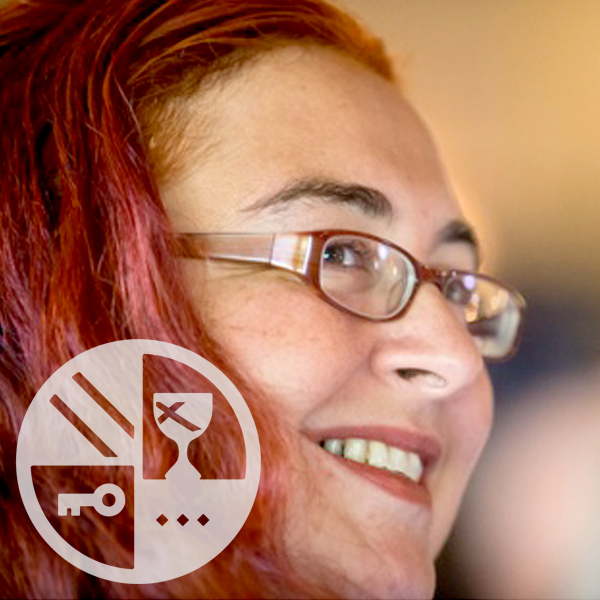
Sandhya Jha
When we talk about equity and buildings, we're usually talking about the profit we can generate. What is exciting about being a community grounded in the prophetic vision of the bible is that we get the chance to evaluate our buildings in terms of the OTHER type of equity -- how might our physical structures be used to create Beloved Community in our neighborhoods, maybe even aspiring to create God's kingdom on earth as it is in heaven? Sandhya Jha will share the story of First Christian Church of Oakland's journey to turning their 40,000 square foot building (with 40 years of deferred maintenance) into a collective of 40 different organizations working to create peace in the city of Oakland. She will also share the stories of other congregations she has worked with through the New Beginnings program of the Disciples of Christ who are using their buildings to create equity in innovative ways.
About Sandhya
Sandhya Jha serves as founder and director of the Oakland Peace Center, a collective of 40 organizations creating access, equity and dignity for all in Oakland and the Bay Area. She also serves as Director of Interfaith Programs for East Bay Housing Organizations, where she organizes faith communities to advocate for housing as a human right and spiritual mandate throughout California’s Bay Area. Former pastor of First Christian Church of Oakland and former regional staff with Christian Churches of Northern California-Nevada, Sandhya is the author of Room at the Table, the history of people of color in the Disciples of Christ, and Pre-Post-Racial America: Spiritual Stories from the Front Lines on the subject of race and spirituality in America. She serves as a consultant with Hope Partnership and an anti-racism/anti-oppression trainer with Reconciliation Ministries for the Christian Church (Disciples of Christ). She is a faith-rooted organizer with Interfaith Movement for Human Integrity (formerly Clergy and Laity United for Economic Justice – CA) and is particularly proud of her podcast, Hope from the Hood.
Sandhja's stuff
- Author of Pre Post Racial America: Spiritual Stories from the Front Lines, now available from Chalice Press.
- sandhyajha.com - Blogger on faith, social justice and dating.
- HOPE FROM THE HOOD: THE PEACEFUL CITY - (host) A podcast on the inspiring peace work of Oakland Peace Center partners.
- Preacher, speaker, trainer and facilitator (endorsements available here)
Schedule of Events
Saturday
Workshop: Building Beloved Community through Building Use 11am-1pm
Sunday
Sunday School 9:45-10:45am Sermon 11am
Telling our story: Jon L. Berquist (July 26)
About Dr. Berquist

Jon L. Berquist is President of Disciples Seminary Foundation, which serves as the Disciples’ presence in theological education on the West Coast. He also serves as Professor of Hebrew Bible at Claremont School of Theology and Visiting Professor of Old Testament at San Francisco Theological Seminary. He is an ordained minister with the Christian Church (Disciples of Christ), with a bachelor’s degree from Northwest Christian University, in Eugene, Oregon, and a Ph.D. in Old Testament from Vanderbilt University in Nashville, Tennessee. He has taught at Phillips Theological Seminary in Tulsa, Oklahoma, as well as several other seminaries, including Louisville Presbyterian Theological Seminary. He is also the author or editor of a dozen books in biblical studies and theology, including Reclaiming Her Story: The Witness of Women in the Old Testament, and Judaism in Persia’s Shadow: A Social and Historical Approach. Jon and his wife, Rev. Sally Willis-Watkins, live in southern California.
Disciples Seminary Foundation works with seven regions of the Christian Church (Disciples of Christ) and four partner schools in Washington and California to provide excellent, accessible, and thoroughly Disciples theological education and ministerial formation. DSF mentors and educates more Disciples ministry students than any other seminary, and also offers certificate education for Spanish-speaking ministry. We are committed to leadership for the diverse, innovative, and spiritually vibrant ministry that our churches – and our world – need now.
Schedule of events
9:45 am Sunday School Hour- Jon will update us on happenings from the 2015 General Assembly and also speak about immigration.
11:00 am - Preaching during worship hour
12:30 pm - Workshop on Leadership in Lounge under sanctuary. Light lunch to be served
Do I have to go into the Wilderness? (Mark 1:9-17)

To think a congregation would not only declare that people can love who they want to love was a dream for me. But to think of congregations taking that even a step further to think about what it meant to live in the world as a person who is not heterosexual – well – that meant even more.
I know from my conversations with Derek that this decision came out of the witnessing the wilderness that non-heterosexual people experience in trying to get married.
Derek made clear – this was a pastoral care decision.
This was a case where witnessing wilderness shaped your calling…
One of us (Mark 6:1-13)

I’ve been rejected because people did not like what I had to say, or the way I said it, or to whom I was talking in the first place. I’ve preached sermons that congregations did not want to hear because I told them the truth. They were sinners. So are you. So am I. And the bottom line is that God is not going to make the world a better place for us. God doesn’t even want to change the world. God wants to change us.
Subscribe to us on iTunes!
Telling Our Story: Audrey & Margot Connor (July 11-12)
About Audrey
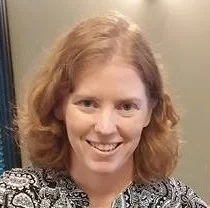
Audrey Connor
Rev. Audrey Connor is a Christian Church (Disciples of Christ) minister who has served as an associate pastor and Family Life Minister in Knoxville, Tennessee and Lynchburg, Virginia respectively. She served as the Disciples of Christ national advocacy organization, GLAD Alliance’s board from 2009 to 2013. And organized the GLAD Easter Writing Project in years 2013 and 2014. Audrey is also an avid lover of problem solving and teaches math in Tuscon, Arizona where she lives with her wife, two dogs, and two cats.
About Margot
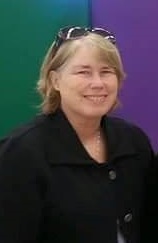
Margot Connor
Rev. Margot Connor is a retired minister in the Christian Church Disciples of Christ who served as pastor to First Christian Church Bowling Green, Ohio and Karl Road Christian Church in Columbus, Ohio. She is a spiritual director, retreat leader and Reiki practitioner. She is also mother of three, grandmother of five and most important, Audrey’s mother! She lives in Columbus, Ohio with her husband Chuck and their puppy Ginger.
Schedule of events:
Saturday
Living in the Tension: What does it look like to live in the space with the gay, lesbian, bisexual, transgender community and the church?
10:30-12 Listening to God’s voice: Breaking down the barriers that keep us from hearing God’s call in our midst.
Noon lunch break 1:00-2:00 Listening to the Voices of the Unheard: Breaking the barriers that keep us from hearing others.
Sunday
Sunday School: Developing Strategies of bringing our voices out in the world: Breaking down the barriers that keep us from sharing our stories with others
Sermon: Do I Have to go into the Wilderness? Mark 1:9-17
Tweeting the Mighty Deeds of God (Psalm 30)

Steve Knight
The real revolution of social media is that it revealed the social layer in the fabric of the Web that was always there, but was not visible before. In that sense, social media has been, as my friend Anthony Smith (@PostmoderNegro on Twitter) would call, “apocalyptic” – it has been a prophetic revelation. Now, I don’t mean “prophetic” in the sense of the Book of Revelation and “the End Times.” I’m using the word “prophetic” here more like Old Testament scholar Walter Brueggemann uses it in his book The Prophetic Imagination. For Brueggemann, being “prophetic” is about translating between the world as it is and the world as it might be.
So, Steve was with us this week. It was pretty cool.
Subscribe to us on iTunes!
Telling Our Story: Steve Knight (Jun 27-28)
The Web, Social Media, and Storytelling
About Steve

Steve Knight
Steve Knight is director of marketing and sales for Chalice Press. He is also co-founder of Transform Network and co-lead minister of Open Hearts Gathering. Steve is the former manager of the Internet division for the Billy Graham Evangelistic Association, who futurist Leonard Sweet once called “the Grand Master of New Media.” He lives with his three children in Gastonia, NC (just outside of Charlotte).
Workshop
Come and learn about the latest social media and digital storytelling tools and how to use them effectively in whatever your context may be (business/non-profit/ministry/church). This is a free workshop, open to the public. All are welcome! Bring your questions and your ideas and let's have some fun talking Web stuff together.
Sermon
The Web is only 26 years old. Facebook, YouTube, and Twitter are all less than 12 years old. But they've changed (and are changing) our worlds. How should we then live in the digital age? And what is the amazing opportunity we all have each and every day that the Web can enable in new and powerful ways?
Check him out on Twitter @knightopia.
Schedule of events
Steve Knight (@knightopia) is joining Douglass Boulevard Christian Church next weekend for a 24-hour blitz of workshops, brainstorming sessions, sermons, and fun.
Saturday
4:30-6:00 Using Social Media to Tell Your Organization's Story
Douglass Boulevard Christian Church, 2005 Douglass Boulevard
Come and learn about the latest social media and digital storytelling tools and how to use them effectively in whatever your context may be (business/non-profit/ministry/church). This is a free workshop, open to the public. All are welcome! Bring your questions and your ideas and let's have some fun talking Web stuff together.
6:00 Dinner and Drinks at North End Café (2116 Bardstown Road)
Welcome Steve to Louisville and continue (or join) the conversation about social media storytelling. Everyone is welcome.
Sunday
9:45-10:45
During Sunday School we will explore what stories we want to tell as a church and how we might use pictures, text, audio, and video to tell those stories and connect with others online. It will be more fun than it sounds and everyone is welcome.
11:00
Worship with DBCC. Steve will be preaching a sermon called, "Tweeting the Mighty Deeds of God". Everyone is welcome.
12:00 Technology Help Desk
Want to tweet but don't know how? Want to create a Facebook event, but don't want to screw it up? Don't know how to back up the contacts on your phone to your computer? Stop by our Help Desk, staffed by young people and nerds, and up your online game.
Building ... Together

Welcoming our guest Julie Richardson delivering her sermon, "Building ... together."
If you like what you hear, check out more of her work and see what she's all about.
Subscribe to us on iTunes!
The Canaries are Singing: Why Youth and Young Adult Ministry Matter
Saturday, June 20th, 10am-noon at DBCC
Join us for a workshop and conversation with Rev. Julie Richardson regarding youth and young adult ministry. Our time with Julie will include some discussion about why it is we do youth ministry at all, how it can serve as a barometer of the church as a whole, how we approach from a relational and congregation-wide perspective, and what some avenues might be for a wider and more effective reach when it comes to youth and young adult ministry in the city of Louisville. Youth, young adults, parents and church leaders are encouraged to come ready to engage in conversation, ask questions and envision a story for the ongoing youth and youth adult ministries at DBCC.
Dispatches from the Sabbatical Front: Thinking Together about Plot

Picture credit: Wikimedia Commons
By Derek Penwell
Well, we're getting ready to head to Italy in a couple of hours. We're very excited!
I miss everyone already, even though it's only been a couple of weeks since this whole sabbatical thing started. So, I thought I'd check in to let you know how we're doing and to begin thinking with you about the craft of storytelling. Part of the purpose of the sabbatical, for me and for you, is to think more intentionally about the story we tell ourselves about ourselves. We've had a great deal of change over the past 7 1/2 years, and we need to tell ourselves a story about what all that change means, why it happened, where were we headed without the changes, and what (if anything) ties those changes together into a coherent narrative.
I've gone into some detail about the kinds of changes we've experienced, but now we need to start thinking about how we want to structure the plot of the story. And as you might expect from an Aristotelian, I suggest we start with Aristotle—which is not nearly as parochial a decision on my part as you might imagine. Turns out that Aristotle actually set down the model for plot (mythos) and plot structure that is still in use today in his seminal book, the Poetics:
As to that poetic imitation which is narrative in form and employs a single metre, the plot manifestly ought, as in a tragedy, to be constructed on dramatic principles. It should have for its subject a single action, whole and complete, with a beginning, a middle, and an end. It will thus resemble a living organism in all its unity, and produce the pleasure proper to it. It will differ in structure from historical compositions, which of necessity present not a single action, but a single period, and all that happened with that period to one person or to many, little connected together as the events may be (1459a17-25).
Notice that Aristotle understands narrative plot to be different from "historical composition," because history is (at least according to Aristotle) first concerned with getting all the facts (as we understand them) put down in the order in which they occurred. On this reading, history is the listing of discrete episodes within a given period of time, concerning a specific person or group of persons—that is, sort of like making a list of all the stuff that has happened to DBCC over the past 7 1/2 years—which, I would argue, is fairly easy to do. All you need for historical compositions (at least the way Aristotle describes them) are people who know what happened and when. But plot requires something more.
Like what?
It needs to provide answers to the question, "Why did those things happen?"
One of the virtues of telling DBCC's story as a story instead of as a historical composition is that stories can be told and retold by just about anyone. Historical compositions, on the other hand, require their chroniclers to know all the facts. Congregations rarely have anyone who knows all the facts about what has happened over a given period of time, and even fewer people dedicated to making certain all the details are preserved.
But in a story, the facts (though not unimportant) serve the story, rather than existing as unconnected nuggets of experience. That is not to say that in telling a story we necessarily change the facts to suit the plot we're trying to develop. What it means is that it is possible to recount the plot of a story by almost anyone, regardless of whether or not that person knows all the "facts" of the history. This ability to "tell the story" of a congregation is important because it gives everyone an opportunity to participate in the most communal activity: storytelling, not just the people who were involved. New people, people who haven't figured quite how to contribute to the story yet, as well as people who just don't recall all the "facts" of the story, can at least give a brief recitation of the plot. Even people who don't know all of the events of Homer's Odyssey, for example, can often give a basic summary of the plot: Odysseus wants to go home to his wife, but he keeps running into trouble that prevents him from getting there.
Yes, such a plot summary is simple, but it easy to tell. And the fact that it's easy to tell is an important part of being a member of the community. In religion, for example, that's one of the most significant functions of myth. Myths provide access to a storied community, access to which community is severely limited if you don't have at least a basic understanding of the story. All communities have stories that bind them together. But until people have been around long enough to know all the stories, they need a shorthand version of the broader story to feel like they belong.
Another virtue of telling DBCC's story as a story, instead of as a historical composition, is that because stories are plotted along a trajectory, you can project that plot into the future. That is to say, having seen not only where we've come from but why we've arrived at where we are, we have a much better opportunity to think more intentionally about how that story will take shape heading into the future. Having a grasp of the story as story, in other words, helps us to know with greater fidelity what we might be situated to do next, and helps to give us more objective (i.e., mission/vision-driven) criteria by which to determine whether a new initiative aligns with our story.
Ok. Enough with the egghead stuff. (Well, maybe just a little more, but not much.)
One of the first things we need to start identifying, if we're plotting our story is the backbone of the plot: conflict. Of course, I realize that the the word conflict has some bad resonances when you're talking to people who've been in church any length of time. But when I say conflict in this context, what I'm talking about is much more comprehensive than listing the fights the church has had, much more "meta."
What do I mean?
One way of thinking about conflict in plot is: Desire meets Obstacle.
In stories that we all know the Desire might be to get the boy/girl, to save the world, to hold the family together, to survive a catastrophe, to reconcile after a bad dispute, to become a hero, etc. Desire in this sense is the thing that motivates the characters of the story as they move through the plot.
Obstacles, on the other hand, are those things that stand between the character and that which the character desires: the ticking time bomb, the evil villain, her penchant for self-destruction, a horrible spouse/boss/parent, his own weakness or the weakness of someone he loves, etc. Obstacle in this sense is the thing that provides tension (i.e., the part that makes the story feel interesting to us) as the desire is thwarted.
The story flows from the repeated clash of Desire and Obstacle. Plug in Desire and Obstacle to your own favorite novel or movie, and see if it doesn't work.
In the case of DBCC, our job in writing our story is first to identify our Desire (What do we want passionately? What drives us? What makes our actions intelligible as motivation?). Then we need to identify the Obstacle that has tended to get in the way of/thwart our Desire (What scares us? What do we spend the most time trying to solve? Are there particular times when the Obstacle is more pressing?).
So, that's what we want to start thinking about: What is DBCC's Desire, and what is the Obstacle it keeps running into?
I'll be thinking about this along with you. Email me with your ideas. But if I don't get back to you right away, don't worry . . . I'm in Italy.
;)
Love,
Derek